


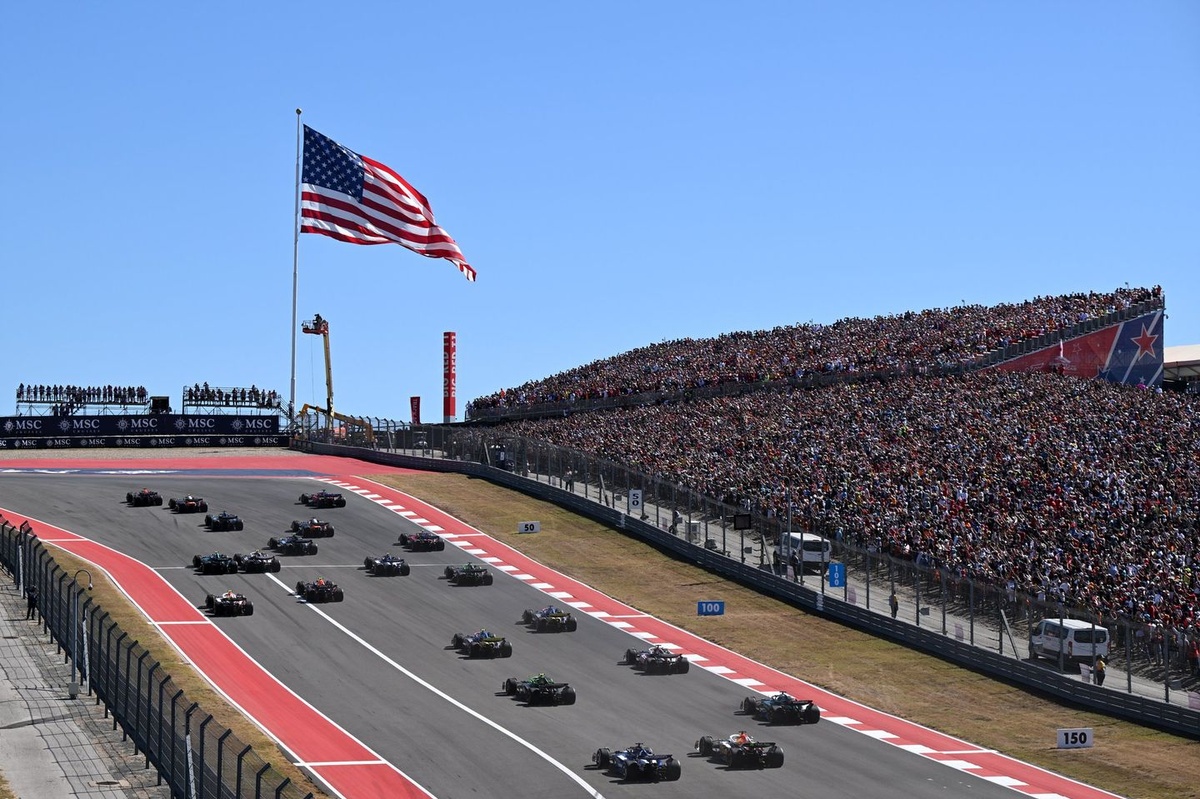
The Red Bull driver said the problem had been discussed for years but remained unresolved, describing the surface as “extremely badly bumpy” after experiencing it during the World Endurance Championship’s Lone Star Le Mans round in Texas in September.
Key Highlights
Verstappen called COTA’s bumps “unacceptable” and said the long-running issue was “out of control.”
Sections of the circuit were resurfaced ahead of the 2026 US GP, following earlier repairs and a full resurfacing before the 2024 race.
The 2026 cars could worsen the problem because they run low in corners and experience more bottoming under braking.
Verstappen reported vertical loads exceeding 9G on his spine last year and warned that continuing under these conditions could cause further damage.
Verstappen Questions COTA’s Track Conditions
Speaking at Austin’s media day, Verstappen made clear that his earlier comments about needing a new spine were not simply a joke. “From what I saw in WEC, it was extremely badly bumpy. I'm not really looking forward to that, to be honest, for your spine,” he said.
The Dutchman added that drivers had raised the issue for years, but believed it had become “out of control.” Although he enjoys COTA’s layout and racing in Austin, he argued that the surface conditions were no longer acceptable.
Sections of the circuit, including Turns 9–11, were resurfaced ahead of the 2026 event, while repairs were also carried out between Turns 12 and 19. The entire track had previously been resurfaced before the 2024 United States GP.
Why COTA Continues to Develop Bumps
COTA was built on high-plasticity Texas clay, which expands and contracts as weather conditions change. This movement can shift the ground beneath the track and create bumps, particularly in heavy braking zones.
Verstappen said the soil conditions should not be used as an excuse. If the underlying issue is known, he argued, the circuit should be reinforced to prevent the problem from returning.
Simply grinding down uneven sections would only provide a temporary fix. “You have to open up the whole track and fix it underneath,” he explained, acknowledging that a proper solution would be expensive and time-consuming.
2026 Cars Could Make the Problem Worse
Verstappen is also concerned that the latest generation of F1 cars could make the bumps more uncomfortable. The cars run at low ride heights through corners, while their straight-line mode changes their ride height. Under braking, however, they can bottom out more heavily than previous cars.
Because many of COTA’s bumps are located in corners and braking zones rather than on the straights, drivers could face even greater physical strain. The surface can also become unpredictable when drivers move off the racing line, making the experience uncomfortable and difficult to manage.
Verstappen Warns of Further Back Damage
Verstappen revealed that he experienced vertical loads of more than 9G on his spine last year, compared with around 5G to 6G when cornering. After more than 11 seasons in F1, he said medical checks had shown that the lower part of his spine was not in good condition.
While acknowledging that motorsport comes with inherent risks, he believes the physical demands of the current cars, combined with the circuit’s bumps, could cause further damage.
For Verstappen, the solution is clear: COTA needs to address the underlying cause rather than continue making temporary repairs. Otherwise, he warned, drivers will keep paying the physical price.