


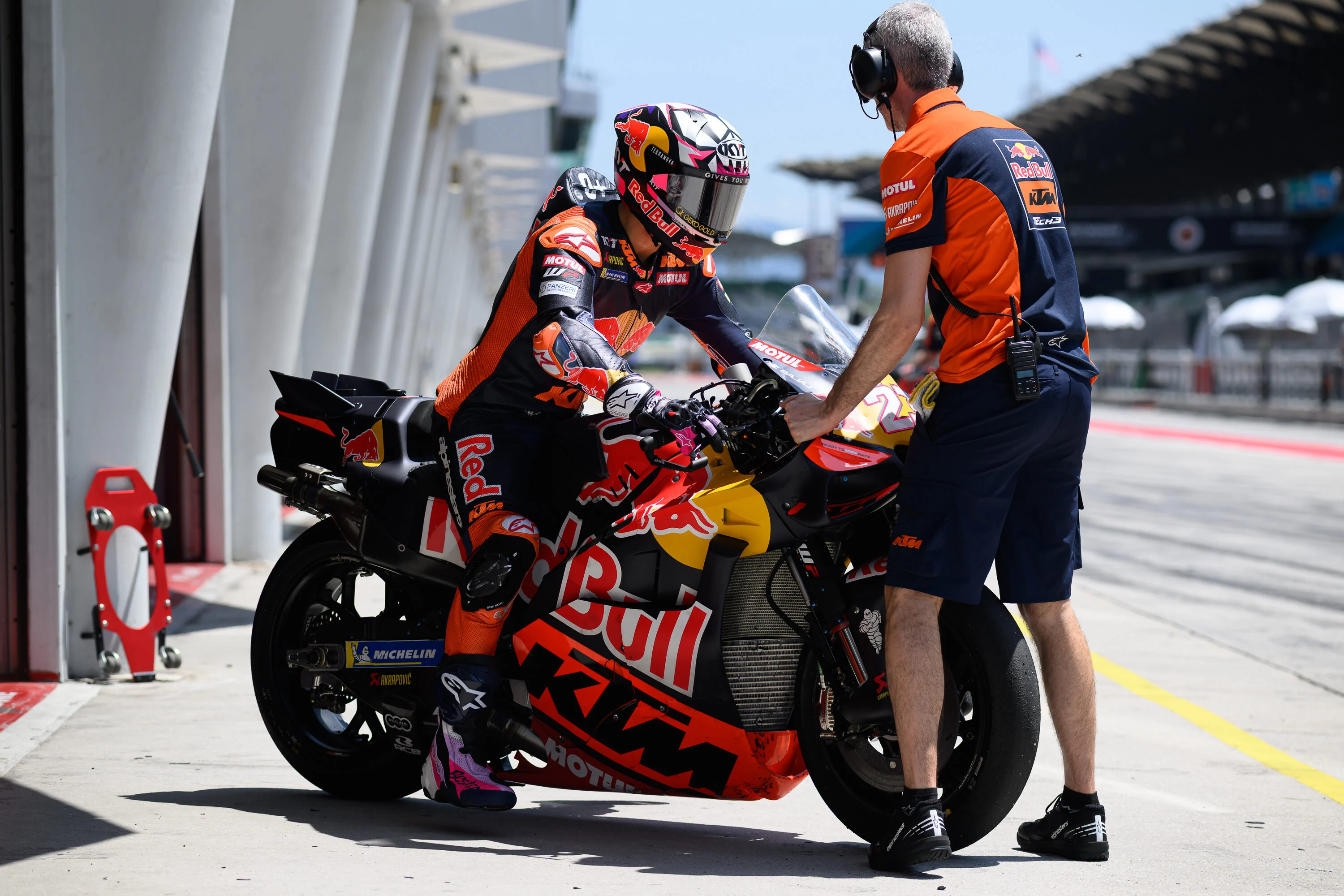
KTM is preparing for a major reset in MotoGP as it looks to close the gap to Ducati and Aprilia with an entirely new motorcycle for the 2027 season.
Despite securing eight Grand Prix victories and three Sprint wins since joining the premier class in 2017, the Austrian manufacturer has struggled to establish itself as a consistent championship contender. While riders such as Miguel Oliveira, Brad Binder and Pedro Acosta have delivered promising performances, KTM has yet to make the final step towards regularly challenging at the front.
Motorsport Director Pit Beirer believes the RC16's main weakness lies in its handling through corners, particularly when riders turn the bike and release the brakes. According to him, the motorcycle does not change direction and settle quickly enough, leaving riders poorly positioned to accelerate out of corners.
“If you turn just a little better, you pick up more early, you put the tyre in the right place, you have more drive,” Beirer explained.
He stressed that the problem is not simply a lack of engine power. Instead, the bike's cornering behaviour prevents riders from getting into the right position to make the most of its acceleration.
KTM has attempted to address these shortcomings through successive updates, but Beirer believes the limitations of the existing design make further progress difficult. The upcoming regulation changes therefore offer an opportunity to tackle the problem from the ground up.
The 2027 MotoGP season will introduce a new technical era, giving manufacturers the chance to rethink their motorcycle designs. For KTM, this means moving beyond incremental improvements and developing a completely new machine based on the lessons learned during its time in the premier class.
“We didn't have the chance to make really a complete new bike. You always add on something and you change this, then you change that,” Beirer said.
He explained that the team has often been limited to modifying existing components rather than fundamentally changing the motorcycle's architecture, including the positioning of key elements such as the sprocket and crankshaft. The new regulations will provide greater scope to reconsider these design choices and improve the RC16's overall handling.
Source: KTM
Acosta's impending departure to Ducati adds further urgency to KTM's plans. The young Spaniard has been one of the manufacturer's strongest performers and has often demonstrated an ability to compensate for the bike's limitations through his riding. Beirer admitted that he would have preferred to keep Acosta but acknowledged that the motorcycle needs to improve.
“I would lie if I say I wouldn't like Pedro to stay. But maybe it has to be like this. We got so much pressure and the bike needs to be better. For sure, Pedro is better than the bike,” he said.
The 2027 project will also coincide with significant changes to KTM's rider lineup, giving the manufacturer an opportunity to begin a new chapter both on and off the track. Beirer believes a fresh motorcycle and riders committed to the project could provide renewed motivation throughout the organisation.
“New bike, new riders, and definitely riders who really want to come to our place I think that will give a new motivation to work and work positive towards the future,” he said.
For KTM, the challenge now is to turn its diagnosis of the RC16's weaknesses into tangible improvements. The manufacturer has already demonstrated that it can win races, but consistent performance remains the missing piece in its pursuit of MotoGP's leading teams.
The 2027 regulations offer a valuable opportunity to make that breakthrough. Whether KTM can translate a clean-sheet design into a genuine title contender will depend on how effectively it addresses its handling problems and develops a motorcycle capable of competing at the front throughout the season.