


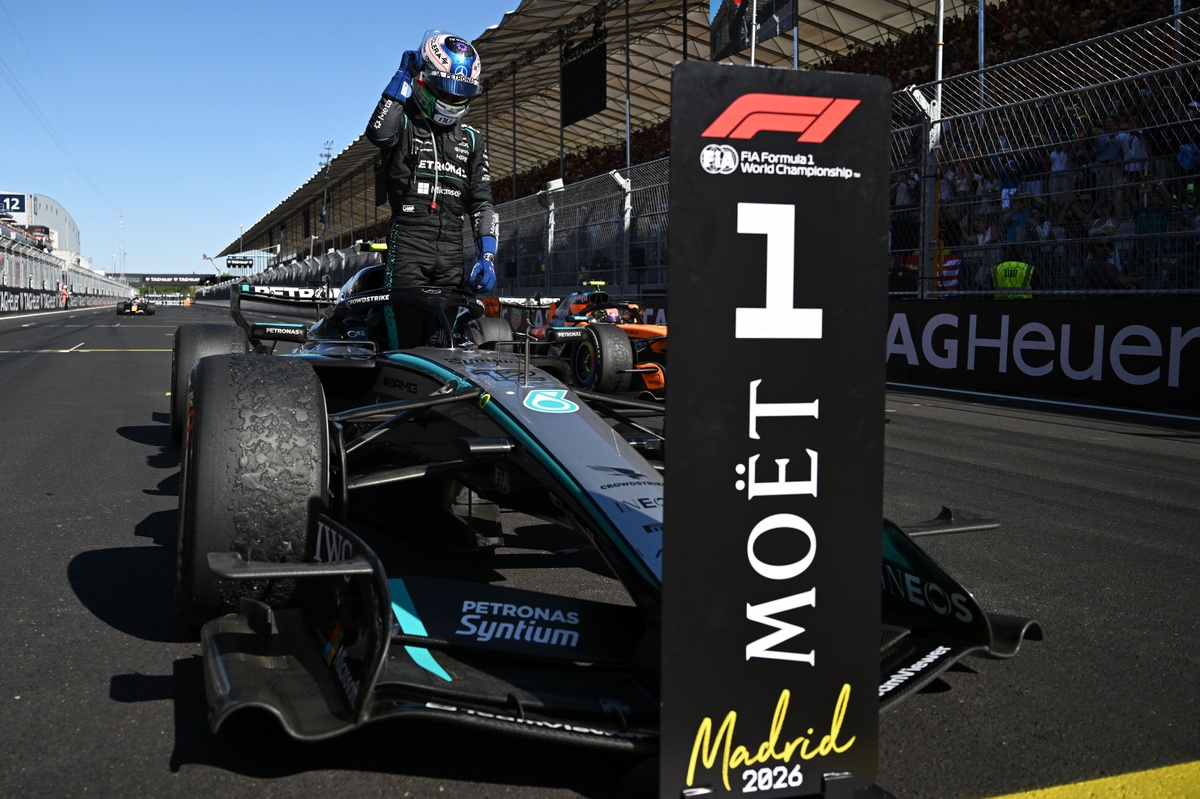
It's an undeniable truth in Formula 1: a team chasing championships often needs a clear leader. According to Red Bull boss Christian Horner, that moment has arrived for Mercedes, with Kimi Antonelli having firmly earned the right to be their designated number one driver. The young Italian's meteoric rise to potential world champion status in 2026 demands a shift in strategy from the Silver Arrows.
Key Points:
Kimi Antonelli's dominant 2026 season has made him the clear choice for Mercedes' top driver.
Christian Horner asserts that on-track performance must dictate team hierarchy for championship success.
Red Bull's history with Sebastian Vettel and Max Verstappen exemplifies this 'number one' strategy.
The debate highlights the perennial tension between equal opportunity and focused championship pursuit.
The Rise of a New F1 King: Antonelli's Undeniable Claim
At just 20 years old and in only his second Formula 1 season, Kimi Antonelli is already on the cusp of an F1 World Championship. His Mercedes campaign has been nothing short of a masterclass, securing 8 wins and 14 podiums en route to a formidable 102-point lead over teammate George Russell. This isn't just a strong performance; it's a statement of absolute dominance.
Horner’s assessment is unflinching: Antonelli's on-track excellence has removed any ambiguity about who should lead the Mercedes charge. This level of performance, he argues, naturally confers 'number one' status, regardless of prior team expectations.
Horner's Hard Truth: Why Driver Hierarchy Matters
The philosophy of a clear number one driver has been a cornerstone of Red Bull's championship dynasty. From the era of Sebastian Vettel to the current reign of Max Verstappen, Horner’s teams have consistently empowered a single driver once their superiority became evident. He believes this is not favoritism, but a pragmatic approach to securing titles.
Horner pointed to historical examples, contrasting McLaren's recent equal-treatment approach with Lando Norris and Oscar Piastri, which, while competitive, nearly saw them lose out to Verstappen's singular focus. He also invoked the infamous 1986 season, where Williams squandered a drivers' title with Nigel Mansell and Nelson Piquet by allowing their internal rivalry to be exploited by Alain Prost.
Lessons from Red Bull's Reign
The origins of Red Bull's ruthless efficiency in driver management can be traced back to the heated 2010 season. Intense clashes and mutual championship bids between Sebastian Vettel and Mark Webber almost gifted the title to Ferrari's Fernando Alonso. This pivotal experience solidified Horner’s conviction: the team's ultimate objective—winning—must always override individual driver ambitions when it comes to strategic decisions.
“Ultimately, the team is what comes first, and the drivers are ultimately contractors,” Horner stated. “To promise both drivers that you can be able to win a world championship is unrealistic.” It’s a harsh reality, but one that has yielded immense success for Red Bull Racing.
What This Means for Mercedes and George Russell
Mercedes now faces a critical juncture. With Antonelli demonstrating clear superiority, the question isn't if he's earned the top spot, but when Mercedes will formally acknowledge it in their team structure. This puts George Russell in a challenging position. Once seen as the heir apparent, Russell must now either elevate his own game dramatically or accept a secondary role within the team.
Horner’s advice is clear: if Mercedes wants to maintain its competitive edge against rivals, it must make the tough calls necessary. Prioritizing Kimi Antonelli as the spearhead would be a strategic move, ensuring full resources are dedicated to maximizing their championship potential. The F1 paddock will be watching closely to see if the Silver Arrows adopt Red Bull's championship-winning blueprint.