


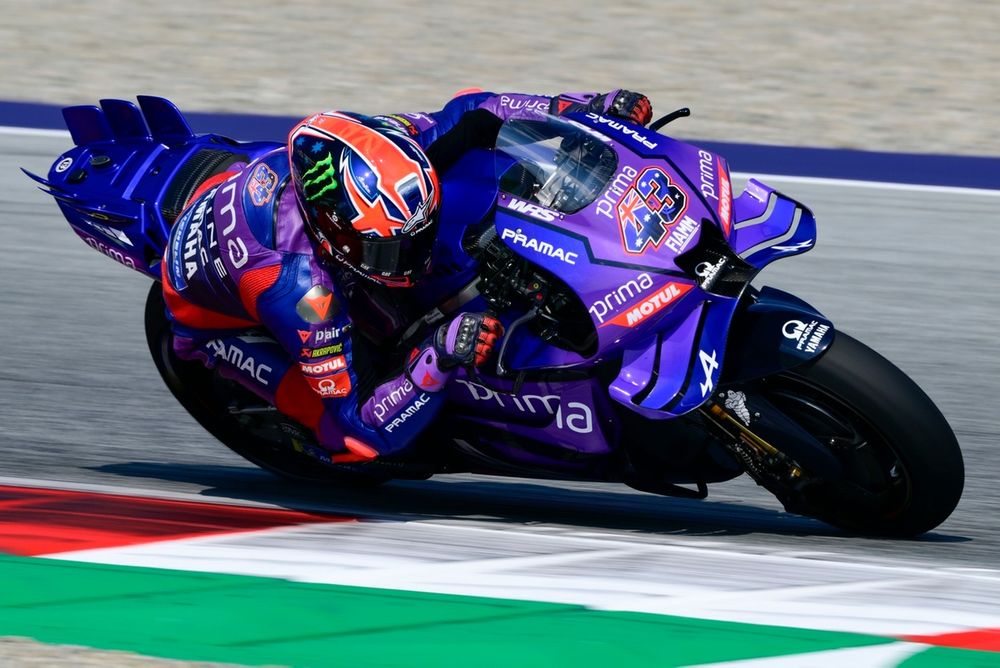
Jack Miller has taken aim at MotoGP riders who skip promotional appearances, insisting that no one should consider themselves exempt from the championship's rules. However, while supporting equal treatment across the grid, the Pramac Yamaha rider believes competitors should receive greater compensation as their commercial commitments grow.
The debate intensified during the Indonesian Grand Prix weekend after MotoGP informed riders that missing mandatory promotional activities, including the popular Hero Walk autograph session, could result in a €5,000 fine.
The decision followed Marc Marquez's absence from a pre-race karting event at the Japanese Grand Prix, where a stand-in appeared in his place. Marquez explained that he needed to treat his injured shoulder after an extended warm-up session, prioritising his physical condition ahead of the race, which he went on to win.
However, the new penalty has drawn criticism from several riders who feel their already demanding schedules are becoming increasingly difficult to manage.
Miller, on the other hand, believes the rules should apply equally to everyone. Speaking to reporters in Indonesia, he questioned why certain riders should be allowed to skip an event while their colleagues are still expected to attend.
"If you're supposed to be there, you're supposed to be there," Miller said.
"I don't think it's for you to take upon yourself."
The Australian argued that riders should not make individual decisions to withdraw from shared commitments when everyone else is required to participate.
"If we are all in the trailer and we all get there together, what makes somebody so special that they think they can walk away and the rest of us all have to go and sign autographs at the Hero Walk?" he added.
"If we all walk away, we all look like c***s. So, nobody is above the rules. Nobody is above the rules, I believe."
Despite his firm stance, Miller acknowledged that the growing number of promotional activities raises questions about how riders are compensated for their time.
"I understand that it's more and more, but at some point they're going to have to start paying us the other way, the riders," he said.
"Because every time you do more and more stuff, the money gets less and less. That's how it goes."
Miller's comments reflect the wider debate surrounding MotoGP's efforts to attract more fans and expand its entertainment offering. Promotional appearances have become an increasingly visible part of race weekends, but some riders believe the additional responsibilities risk placing too much pressure on competitors.
The issue is particularly relevant ahead of the 2027 season, when MotoGP will introduce a revised weekend format. Miller suggested that manufacturers had pushed for more main races while reducing time on track and overall mileage, although he stressed that the racing itself should remain the championship's main attraction.
"The racing itself is the show," he explained. "Us riding the bikes are the show. The other stuff around it gets misconstrued that we're here to be entertainers, which we are, but our entertainment is racing a motorcycle."
His comments carry added significance as he prepares to leave MotoGP for the World Superbike Championship in 2027. Miller has pointed to WorldSBK's lower number of rounds and reduced demands on riders' time as differences between the two championships.
Meanwhile, Marquez has maintained that riders must prioritise their physical condition and performance, particularly when competing for a world championship. His decision to miss the Japanese karting event was linked to his shoulder treatment, highlighting the potential conflict between promotional obligations and an athlete's preparation.
The disagreement leaves MotoGP facing a difficult balancing act. Fan events help bring supporters closer to their favourite riders, but organisers must also consider the physical demands and commercial responsibilities placed on competitors.
For Miller, the principle is straightforward: riders should honour their commitments, provided the rules apply equally to everyone. At the same time, he believes the growing workload should be matched by fairer compensation.