


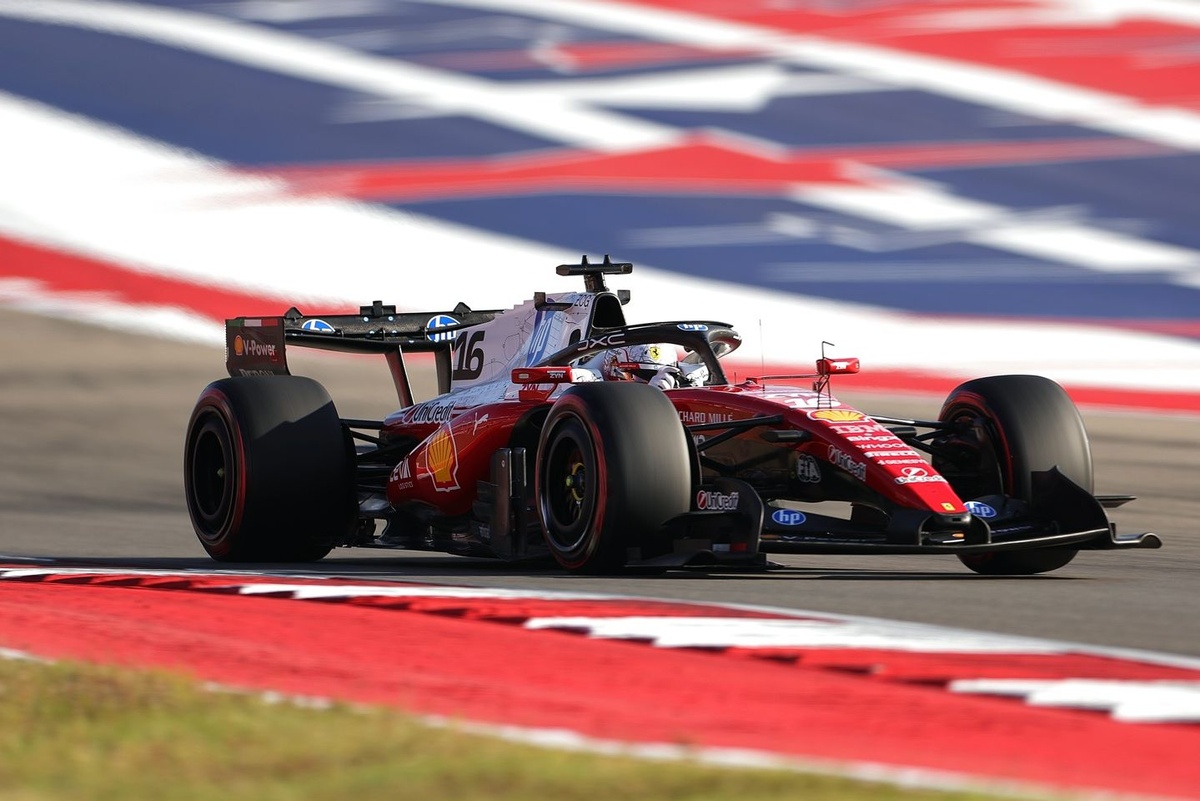
The roar of a promising weekend turned into a whisper of disappointment for Ferrari at the United States Grand Prix qualifying, leaving fans and pundits alike scratching their heads over a P4 and P5 finish for their top drivers.
KEY POINTS FROM AUSTIN QUALIFYING
Ferrari showed strong pace, topping both Friday practice sessions at COTA.
Charles Leclerc qualified P4 and Lewis Hamilton P5 for Sunday's race.
The team faced a critical challenge heating Pirelli tires in the colder Q3 conditions.
A significant straight-line power unit deficit against rivals like Red Bull and Mercedes proved costly.
The Practice Promise: A False Dawn for the Scuderia?
It felt like a different Ferrari outfit that hit the track for practice at the Circuit of the Americas. Charles Leclerc was consistently at the sharp end, leading both Friday sessions and setting the stage for what many believed would be a genuine pole position battle against Red Bull's Max Verstappen. Even as Lewis Hamilton snatched FP3 honors, the Prancing Horse seemed to have the pace.
But as the crucial Q3 session unfolded, the script flipped dramatically. Ferrari's impressive sector times from earlier in the weekend simply evaporated. The raw speed that had put them in contention vanished, replaced by a frustrating lack of progression.
The Elusive Tire Window
For Charles Leclerc, the primary culprit was clear: tire temperature. Ferrari's chassis, while excellent for managing tire heat over a long race stint, struggles to generate the aggressive warmth needed for peak single-lap performance. When track temperatures dropped in Q3, it threw a wrench into their plans, pushing the Pirelli compounds outside their optimal operating window.
"It's very disappointing because we had the potential," Leclerc stated. "But the car also includes tires, and in Q3, unfortunately, we were not in the right place. Just one or two degrees less in Q3 made a huge difference." This sensitivity highlights a fundamental design philosophy that prioritizes Sunday pace over Saturday glory.
Straight-Line Speed: The Unsolved Puzzle
Adding to Ferrari's woes was a persistent straight-line speed deficit. Mercedes' Lewis Hamilton, who ultimately qualified just behind Leclerc, offered a telling observation. He noted that while their car felt strong in the corners, Ferrari was visibly losing time on the straights, especially compared to Max Verstappen's Red Bull.
Hamilton estimated a 3-4 tenths disadvantage on the straights alone, attributing it partly to overall power unit output and electrical system cut-off points. This suggests that even Ferrari's undeniable prowess in low-speed and high-speed corners couldn't fully compensate for the drag and raw grunt of their competitors.
The Cost of Compromise
The combined effect of tire temperature struggles and a power deficit painted a clear picture of Ferrari's US Grand Prix qualifying performance. While their car demonstrated exceptional balance and grip in specific cornering phases, this advantage couldn't carry them through the entirety of a hot lap when the conditions shifted and the stakes were highest. Kimi Antonelli's surprise pole for Mercedes underscored just how much Ferrari left on the table.
Looking Ahead: Race Day Hopes?
Despite the qualifying setback, there's a glimmer of hope for Ferrari. The very chassis characteristic that hinders their single-lap tire warm-up could be an asset in the race, allowing them to manage tire degradation more effectively over longer stints. However, the inherent power unit deficit remains a significant hurdle, especially on COTA's long back straight. The Scuderia will need a masterful strategy and flawless execution to convert their P4 and P5 into a podium finish.