


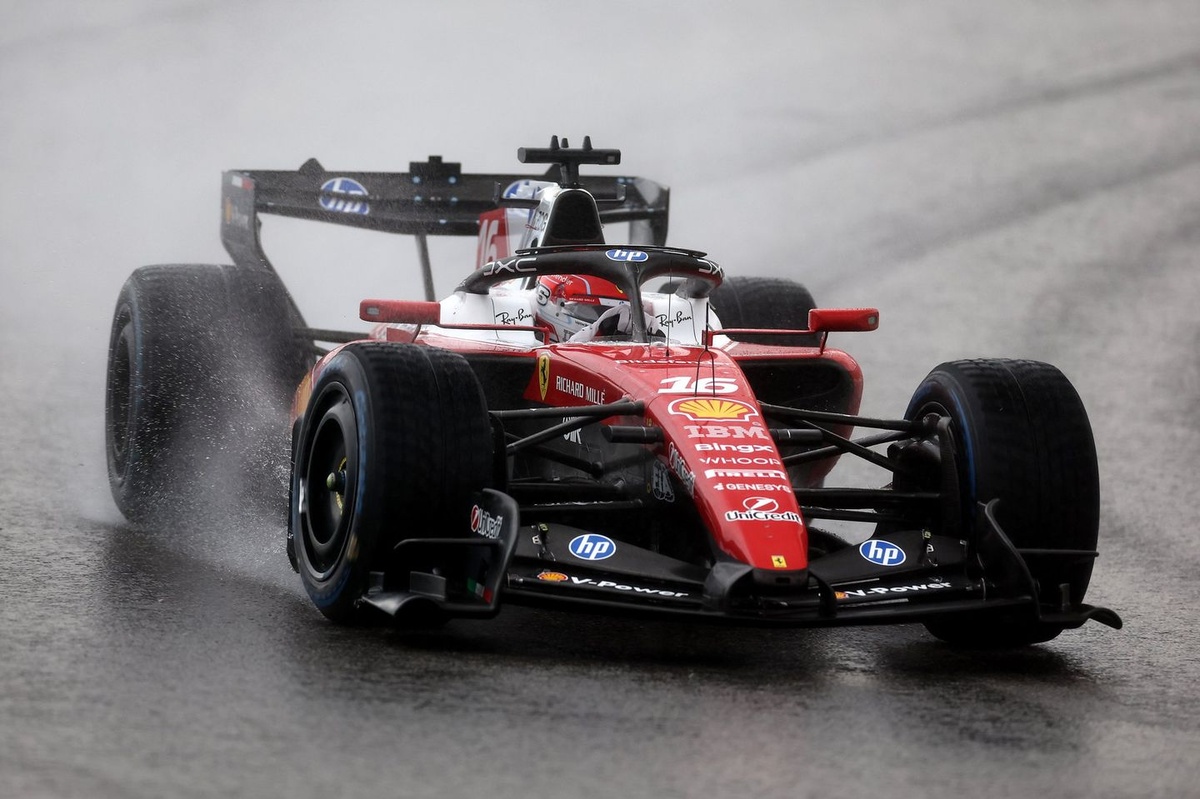
Formula 1's first genuinely wet weekend of the 2026 season at the Brazilian Grand Prix proved less chaotic than many had predicted, though drivers agree the latest wet-weather tyres still fall short.
According to an analysis by Motorsport.com, concerns had built throughout the year that weaker grip from the new intermediate tyres, combined with the harsher torque delivery of the current engines, could make the cars dangerously difficult to drive in the rain.
Qualifying at Interlagos was halted for 80 minutes after a downpour arrived just as the session began. Mercedes driver George Russell warned afterwards that conditions of that kind would have been too dangerous for a race, but the outlet reports that the wider paddock felt the FIA acted correctly by suspending Q1 straight away and carefully waiting for a safe moment to resume.
Ferrari team principal Frederic Vasseur backed the decision, saying his cars returned from their first lap with two centimetres of water inside. He added that the extreme wet tyres can now be used far more than in the past, though he described grip levels on the laps to the grid as very poor.
The intermediates caused more trouble. Kimi Antonelli went off at Juncao on his way to the grid, and several drivers struggled when late rain in the final 10 laps forced a return to that compound. Williams driver Alex Albon, who finished 15th, said the tyres were hard to bring up to temperature yet wore quickly regardless.
The difficulty in generating heat may explain why front-runners had to tread carefully early on, while some starting further back made rapid progress. Max Verstappen and Lewis Hamilton both climbed into the top 10 from 20th and 21st on the grid, although Hamilton later dropped back with severe oversteer.
Carlos Sainz called for more development work with Pirelli on both wet compounds, while Racing Bulls' Liam Lawson suggested cooler temperatures made a big difference and expressed concern about how the tyres might cope with rain at a venue such as Las Vegas.
Pirelli aims next year to bring the two wet compounds closer in performance, with a faster-warming intermediate and a more durable extreme wet tyre.